

Before Someone Else Has to Decide: How to Start the Conversation
There’s a version of planning ahead that ends with a document in a folder and a vague sense of relief. You’ve written down what you want. You feel better. You move on.
And then nothing changes, because the document stays in the folder, and the people who would need it don’t know it exists, and the one conversation that would make any of it matter never happened.
This is the part most planning guides don’t say out loud: the document isn’t the plan. The conversation is the plan. The document is just the record of it.
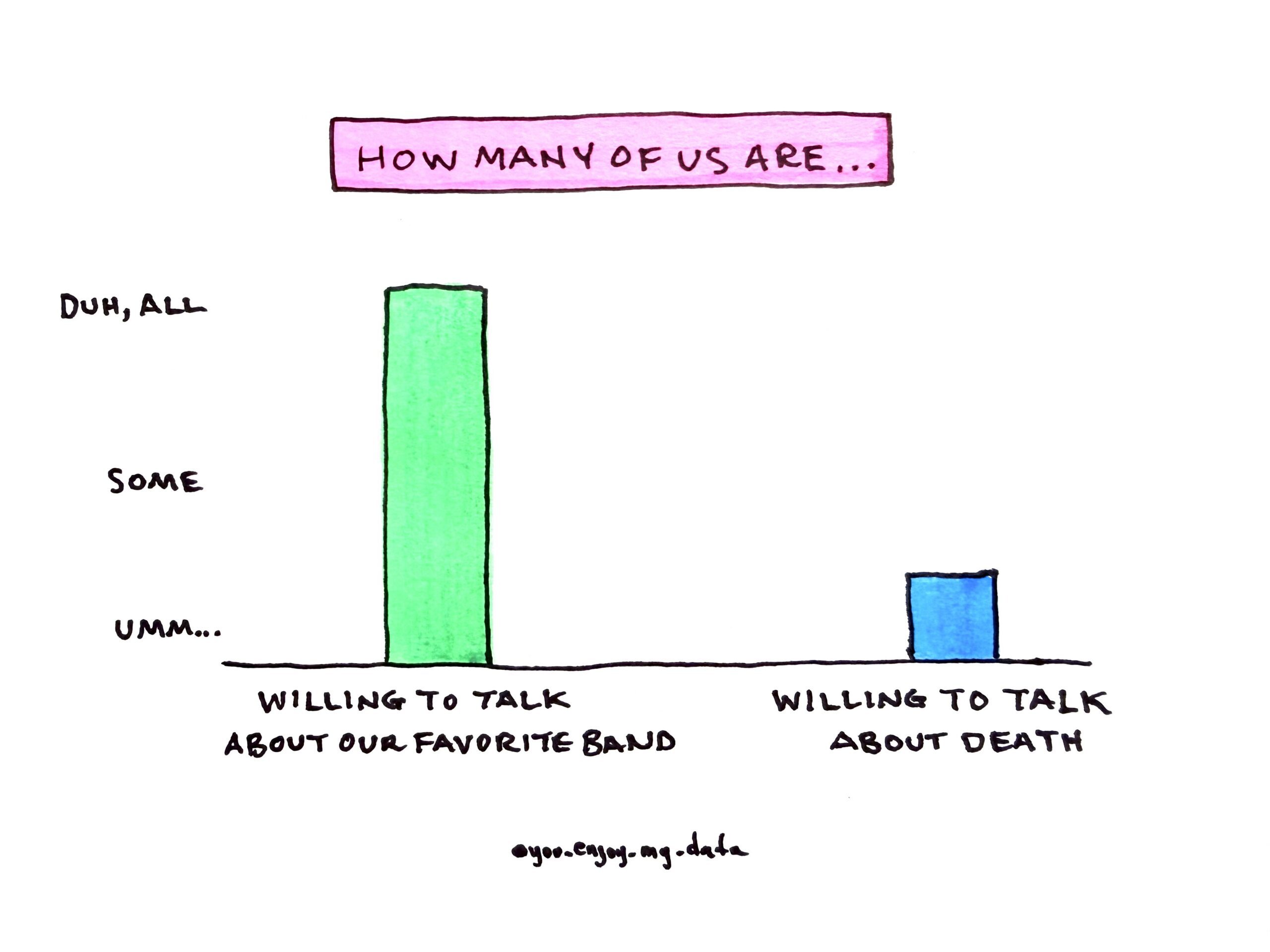
A national survey by The Conversation Project found that 95% of Americans say they’re willing to have this conversation with the people close to them—but fewer than a third have.[1]
That gap narrowed during the COVID-19 pandemic, when death became harder to avoid thinking about. But the conversation still doesn’t happen for a significant number of Americans—and when it does, it often happens too late.
That’s not denial. For most people it’s simpler than that: they don’t want to upset someone. They don’t know how to start. There’s no vocabulary that feels right and no specific reason to do it today. So it waits.
Ellen Goodman, who co-founded The Conversation Project, describes the conversation this way: it’s about what matters to you, not what’s the matter with you. That reframe helps. It moves the conversation away from illness and crisis and toward something that feels more like an expression of who you are and what you want—which is what it actually is.
Most people don’t start planning because of a spontaneous decision. They start because something happened: a death in their circle, a diagnosis, watching someone navigate loss without any guidance. If that’s what brought you here, you’re in the right place. And if it wasn’t—if you’re here because something told you it was time—that’s equally the right reason.
Here’s what the conversation actually looks like to start.
What you’re actually planning for
When someone dies without having talked to anyone about their wishes, the people left behind don’t just lose them. They lose them while simultaneously being asked to make decisions they were never equipped to make—about the body, about the gathering, about money, about who gets to decide.
Those decisions are made under time pressure, in grief, often by people who disagree about what the person would have wanted. Sometimes they’re made by whoever shows up first, or whoever has the legal standing, or whoever is willing to fight for it. Sometimes they’re made by someone who would have been the last person chosen. Some of those decisions can’t be undone.
If you’ve already lived this—if you’ve been the one making decisions in grief without any map for what you were doing—that experience matters here. This post isn’t only for people still planning. It’s for you too.
A written plan helps. It’s genuinely better than nothing. But in most states, next of kin holds legal authority over what happens to your body regardless of what you’ve written. A plan that no one knows about, or that no one has been authorized to carry out, is a document. It isn’t a plan.
The conversation turns it into a plan.
Research on end-of-life planning has found that people who have substantive conversations about their wishes are more likely to have those wishes honored, more likely to die in the setting they’d choose, and more likely to have a sense of control at the end of life. The people they leave behind are also affected: family members of people who had these conversations show significantly lower rates of persistent depression in the months after a death.[2] The conversation doesn’t just help the person making the plan. It changes what grief looks like for the people who are left.
Who needs to know
You need at least one person who knows three things: that a plan exists, where to find it, and that you want them to be the one carrying it out.
That last part is the piece people skip. They write things down. They tell someone the folder exists. They don’t say: I want you. I want you to be the one who shows up and speaks for me when decisions are being made.
That designation matters most if the person you want isn’t your legal default. In most states, next of kin follows a fixed order—spouse, then adult children, then parents, then siblings—regardless of who actually knows you, who you trust, or who you’d want in that room.
A partner who isn’t a spouse. A chosen family member who knows you better than your family of origin does. A friend who’s been closer than anyone with a legal claim. A sibling, when the parent who would otherwise have authority isn’t someone you’d want making your decisions. Without documentation, the law decides—and it doesn’t ask who you actually wanted. With the conversation, and the documents to back it, you decide.
A healthcare proxy is the person you legally designate to make medical decisions on your behalf if you become unable to make them yourself. The Conversation Project has a free guide specifically for choosing one—including what to tell the person you want to designate and what the role actually involves. A separate guide walks the designated person through what they’ve agreed to. Both are free at theconversationproject.org.
If your honest answer is that there isn’t someone—that your relationships are complicated, your family is estranged, or you simply don’t have someone you’d trust with this—that’s worth naming too. You’re not alone in that. CaringInfo at caringinfo.org is the clearest starting point—it can help you find what exists in your state, including nonprofit volunteer advocate programs, county-level public programs, and legal resources for formalizing your wishes. If you need legal guidance and cost is a barrier, an elder law attorney—a lawyer who specializes in end-of-life planning—or a legal aid organization may be able to help.
Wherever you’re starting from, you don’t have to figure out the first step alone. And if you want to think it through and practice the conversation before you have it—A Conversation with JBG is a place to do that.
If the person you ask says no, don’t take it personally—and don’t let it stop you from asking someone else. No is information, not a verdict.
Some nos are instinctive—a reaction to the weight of the question, or to their own anxiety about death, not to anything about you or your relationship. Some come from genuine uncertainty about what they’d be taking on. If you’re not sure which kind of no you heard, it’s worth asking gently what’s behind it. You can tell them exactly what you’d be asking of them. Some people need to understand what the role actually involves before they can say yes to it. Some genuinely can’t hold it, and that’s real too.
If you hear no, take a breath, thank them for being honest, and think about who else you trust enough to ask. The goal is finding the right person—not convincing the wrong one.
Why this community already knows how to do this
This community has been having hard conversations for over fifty years. Not in conference rooms. Not with a facilitator and a whiteboard. In parking lots and between sets, or on the roads to the next run.
When someone in this community dies, people find each other. The lot memorial materializes. The grief that moves through a crowd when a song hits—that’s not an accident. That’s what it looks like when a community knows how to hold something together.
The conversation about what you want when you die isn’t different from that. It’s the same capacity, pointed at something that hasn’t happened yet. It’s saying: here is what I want, here is who I trust, here is how to find what you need.
How to start
It doesn’t have to be a formal sit-down. It doesn’t require a script. Some of the most important versions of this conversation have happened in a car on the way home from a show, or over food at someone’s kitchen table, or in the lot while waiting for doors.
A few ways in:
Start with the easy part. What kind of gathering would you want—or not want? Most people have strong feelings about this and it’s not the hardest question. Starting there opens the door to the rest.
Ask the question in reverse. “If something happened to you, would I know what you wanted?” turns it into a mutual conversation. This community takes care of each other. That works in both directions.
Share the Plan Ahead page. That’s a conversation opener. “I’ve been thinking about this” is enough to start. You can find it at jambandgraveyard.org/plan-ahead.
Name the person directly. Don’t imply it. “I want you to be the one who handles this if I can’t” is a specific ask that lands differently than a general conversation about wishes. It tells someone they matter. It also gives them the chance to understand what you’re asking and to say yes (or no).
This kind of conversation tends to evolve. What doesn’t land today might open up later—try to leave it open and don’t add pressure.
The Conversation Project’s Starter Kit is built around exactly this reality. It’s organized in four steps—think, plan, start, keep talking—because the conversation isn’t a checkbox. It’s something that develops over time, that gets easier with repetition, and that can deepen as circumstances change. You don’t have to say everything in one sitting. You just have to start—and don’t be afraid to have another conversation if things change for you.
What the conversation actually covers
The full version of this—what to write down, what legal steps matter, what documents protect which decisions—is on the Plan Ahead page. The short version:
Tell the person you trust what you want to happen to your body. If you have specific wishes for your remains—a place to scatter them, something you want them incorporated into, a particular way of handling them—say that out loud. Don’t assume it’s covered because it’s written down somewhere. Tell them. Tell them it matters.
If it matters to you that certain people have time with your body before burial or cremation, say that explicitly—and make sure whoever is handling arrangements knows to protect that window. It can close fast.
Tell them whether you want a gathering and what it should look like. Tell them where your documents are. Tell them who else needs to know. And make sure the person you’ve chosen knows that explicitly—not just in a document, but in a conversation.
If you’re not sure how to structure that conversation once it’s started, the Conversation Project’s guides in the resources section below were built for exactly this.
The harder ask
The hardest part for most people isn’t deciding what they want. It’s saying it directly to someone—I want you to be the one who handles this. That’s a specific ask. It tells someone they matter. It also means they have to say yes or no, and you have to let them.
There may be a pause after you say it. That’s not a sign something went wrong.
That’s worth doing whenever you can—before the moment you can’t.
The document in the folder is a start. The conversation is the thing that makes it matter—to the people who’ll need it, and to you.
Plan Ahead—JBG’s guide to documenting your wishes, naming who speaks for you, and knowing your rights when making arrangements.
JBG is not a therapist, legal advisor, or funeral provider. For clinical or legal support, please seek an appropriate professional.
References
- The Conversation Project. National surveys on end-of-life conversations. theconversationproject.org
- Wright AA, et al. “Associations Between End-of-Life Discussions, Patient Mental Health, Medical Care Near Death, and Caregiver Bereavement Adjustment.” JAMA. 2008;300(14):1665–1673.
Resources
- The Conversation Project Starter Kit—free download at theconversationproject.org/get-started
- Guide to Choosing a Healthcare Proxy—theconversationproject.org
- Guide to Being a Healthcare Proxy—theconversationproject.org
- JBG Plan Ahead—jambandgraveyard.org/plan-ahead
- Equitable Disposition Alliance Regional Public Disposition Database—equitabledisposition.org/database/ (a free, searchable database of public disposition programs by region, for people with no next-of-kin or no funds for private arrangements)