
Planning a Casket or Urn Outside the Funeral Home: A Practical Guide
This post picks up where our rights overview leaves off. If you’re here first, the short version is: federal law protects your right to bring your own casket or urn—no handling fee, no penalty. You can read the full rights overview at jambandgraveyard.org/buy-casket-urn-funeral-home/. This post is for folks planning ahead or anyone who wants a fuller practical picture.
What Are the Options, and What Do They Cost?
From most to least expensive, here are the realistic options for a casket or cremation container. All figures reflect national medians or typical ranges; costs vary by region and provider.
Casket Options
Full casket from the funeral home. The national median for a funeral with casket and burial is $8,300, with a metal burial casket accounting for approximately $2,500 of that total.1 Caskets range from roughly $1,000 to well over $10,000 depending on material and construction. The FTC Funeral Rule’s price list requirement exists specifically to give you the information needed to compare options before committing.
Full casket from a third-party seller. Online retailers, warehouse clubs, and independent casket sellers offer comparable caskets at significantly lower prices. The FTC Funeral Rule requires the funeral home to accept them without a handling fee.
Rental casket. For families who want a traditional-looking service before cremation, many funeral homes offer a rental casket. The person who died is present in the casket for the service. The funeral home then transfers them to a cremation container before cremation and keeps the rental casket. Rental fees vary by funeral home and region—ask specifically for the rental price on the itemized price list.
DIY casket. Building a casket is legal, and for many families it is also meaningful. Working with your hands, making something tangible during an otherwise helpless time, carries its own weight. Material costs for a basic pine casket typically run $150–$300 for lumber and hardware depending on regional lumber prices; premium hardwoods run higher. Pre-cut kits are available from specialty suppliers. The project takes roughly 20–25 hours for an experienced builder. Confirm dimensions and material requirements with the funeral home or cemetery before you build.
Cremation Container Options
Alternative cremation container. If cremation is the plan and no casket or public viewing is needed, the FTC Funeral Rule requires funeral homes to offer an alternative cremation container—a simple, fully combustible container that goes into the cremation chamber with the person who died.2 The national median cost for an alternative cremation container is $150.1
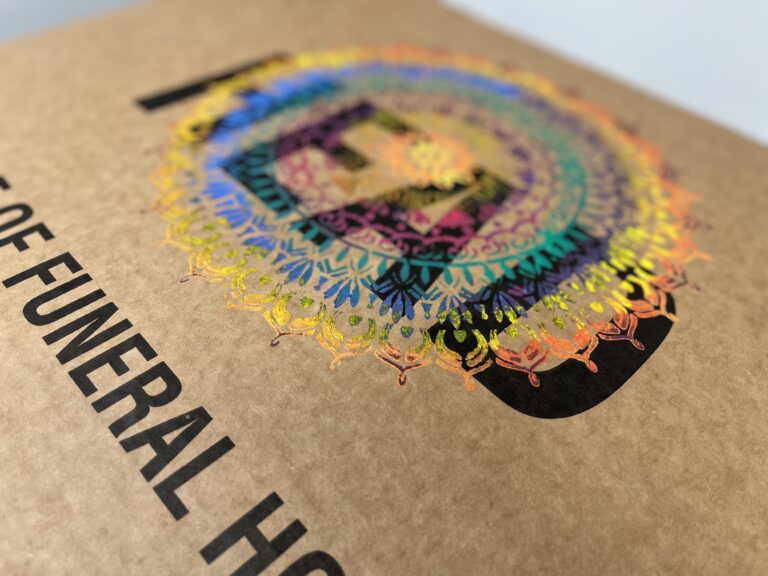
People jokingly call this container the “pizza box,” which can be disparaging to someone in need of the most inexpensive option. It doesn’t have to be demeaning or impersonal. You can decorate, paint, write on, or cover these containers with objects that meant something—ticket stubs, photographs, patches, whatever reflects who this person was. The founder of Jam Band Graveyard has chosen one covered in concert ticket stubs for her own cremation (see how that came together on our How This Started page). If you’re planning ahead, this is worth thinking about early. If you’re making arrangements now, ask the funeral home or crematory whether there’s still time to personalize.
If you’re using a casket rather than an alternative container for cremation, the material must be fully combustible—no fiberglass, no styrofoam, and states heavily restrict plastics. Confirm material requirements with the crematory before you source or build.
Before You Source or Build a Casket
Dimensions. Ask the funeral home what they require before you commit to anything. A casket that doesn’t fit creates real problems at the worst possible moment.
Weight and grip. This affects how people handle and transport the casket—and whether it’s safe for pallbearers. If pallbearers will carry the casket, it needs functional, secure handholds at a weight they can manage. A beautiful hand-built casket with no grip points puts people at risk.
Timeline. If you’re sourcing from an outside seller, confirm the delivery window. Whatever you’re bringing needs to arrive in time for the services you’re planning.
Delivery, Structure, and Burial
Delivery. You don’t have to be at the funeral home when the casket arrives. The funeral home cannot require your presence as a condition of accepting it.2 However, proactive communication with the funeral home is your best tool for a smooth process. Confirm what you’re bringing, get any requirements in writing, and don’t assume no news is good news.
Structural integrity. Whatever you source or build needs to be rigid, leakproof, and able to hold its shape through transport and handling. If you’ve seen I Think You Should Leave’s plea to Save Corncob TV, you have a vivid illustration of what happens when it doesn’t. This isn’t just about dignity—funeral homes and crematories have legitimate requirements around structural integrity, and a container that fails creates real problems for everyone involved.
If ground burial is the plan. The conversation doesn’t end with the funeral home. Cemeteries have their own requirements—vault or liner requirements are common—that you’ll need to confirm separately. The funeral home and the cemetery are two different institutions with two different sets of rules. The FTC Funeral Rule applies to funeral homes, not to cemeteries, unless those cemeteries also sell funeral services on-site.2 Each cemetery sets its own requirements, and they vary widely.
Before You Choose an Urn
If you haven’t yet chosen an urn. The crematory will return cremated remains in a basic container—typically cardboard or rigid plastic. This container is adequate for burial, shipping, storing, or placement in a columbarium.3 It is a legitimate choice, not a placeholder. The national median cost for a funeral home urn is $295;1 urns sourced elsewhere can range from modest to highly personalized at a wide range of price points.
How Much Volume You Need
Interior volume. Crematories measure cremated remains in cubic inches, and not all urns hold a full set. The volume you need depends on the method of disposition: fire cremation and water cremation produce different volumes of cremated remains. Water cremation—also called alkaline hydrolysis, aquamation, and even resomation—uses water and an alkaline solution rather than flame and generally produces a larger volume of cremated remains than fire cremation.4 Ask the cremation provider how much volume you need before you select anything.
Water cremation is currently legal in 26 states as of March 2026, though legal status and practical availability are not always the same—some states have no licensed providers yet.4 Mayo Clinic has used alkaline hydrolysis for body donation since 2006.5
Where the Urn Will Go
If the urn is going into a niche or columbarium. Exterior dimensions matter here, not just interior volume. A niche has fixed opening dimensions the urn must physically fit through. Confirm those measurements before you buy or create the urn.
If the urn is going in the ground. Most cemeteries require a liner or vault for a buried urn, the same way they do for casket burial. Confirm with the cemetery directly. The FTC Funeral Rule does not apply to cemeteries—each one sets its requirements independently.
Keepsake urns. If multiple people want to hold a portion of the cremated remains, or if you want to retain a small amount while scattering the rest, keepsake urns are small vessels made for exactly that purpose.
If scattering is the plan. Scattering is an option in many places, but regulations vary by location—land, water, public versus private property. Research the specific location before you commit. And consider this: scattering is irreversible. If there’s any chance you’ll want a dedicated place to return to, a keepsake urn for yourself or someone else, or a portion for other personalization, consider reserving a small portion first. You can always scatter the remaining portion later. The reverse is not true.
If you’re uncertain about transferring cremated remains from one vessel to another yourself, the funeral home or crematory that served you is likely willing to help. In our experience, they’re often honored to assist.
Know Your Rights
For the full picture of your rights under the FTC Funeral Rule—price transparency, embalming, itemized pricing, and more—visit our Know Your Rights page.
New to this topic? Start with our rights overview: Do You Have to Buy a Casket or Urn From the Funeral Home?
References
- National Funeral Directors Association (NFDA). 2023 Member General Price List Study. nfda.org.
- Federal Trade Commission. The FTC Funeral Rule. consumer.ftc.gov.
- Funeral Consumers Alliance. Your Funeral Rights. funerals.org.
- Cremation Association of North America (CANA). Alkaline Hydrolysis. cremationassociation.org. (as of March 2026)
- Mayo Clinic. Biocremation/Resomation: Body Donation Program. mayoclinic.org.
Jam Band Graveyard provides information and education grounded in the FTC Funeral Rule and other consumer protection resources. We are not attorneys and this is not legal advice. For complex situations or disputes with a funeral home, consider contacting your state attorney general’s consumer protection office or a funeral consumer advocacy organization.